

Tibetan Singing Bowl – How to Choose the Right One
01.07.2026
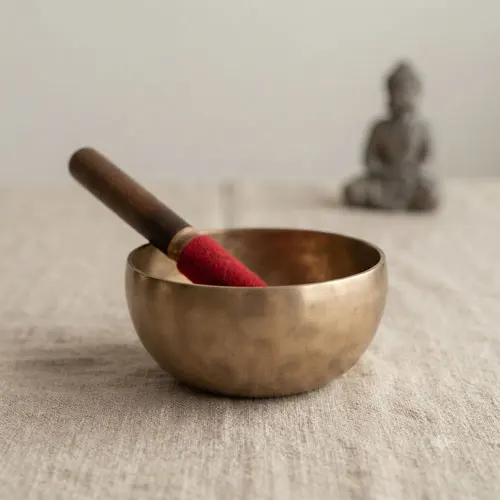
If you have been considering purchasing a Tibetan singing bowl, you have likely noticed that the options can feel overwhelming. With various sizes, intricate engravings, and distinct shapes, it often feels as though there is a complex set of rules to follow before making your first purchase. In truth, finding the right bowl is far simpler than it appears.
One of the most common dilemmas shoppers face is how to choose a Tibetan singing bowl online. While photos can display a bowl’s aesthetic, shape, and size, they cannot convey the most important quality: the sound.
For this reason, we always encourage visitors to stop by, listen to our collection in person, and find the bowl that resonates with them. Often, a customer is drawn to a bowl they would never have chosen based on a photo alone. If a visit is not possible, we are always happy to prepare a sound recording of any specific bowl. This allows you to hear its unique tone, resonance, and character before you commit.
In our experience, the sound is ultimately what guides you to your perfect singing bowl.
What is a Tibetan Singing Bowl?
Although they are known as Tibetan singing bowls, most today originate from Nepal and northern India, where traditional craftsmanship continues to thrive.
These metal vessels create a rich, multi-layered, and long-lasting tone when struck gently or circled with a wooden striker. This distinctive sound has been utilized for centuries in meditation, yoga, and various spiritual practices.
Today, people incorporate them into their daily routines at home—not necessarily as seasoned meditators, but as individuals seeking a few minutes of soothing sound to release tension and find calm after a busy day.
Why Sound Outperforms Aesthetics
Many shoppers begin their search by focusing on engravings. Symbols like the Om, Buddha, lotus, or mandalas undeniably make a singing bowl look beautiful.
However, engravings do not dictate the sound. Similarly, a larger bowl is not inherently better than a smaller one. Sound quality depends on the craftsmanship, shape, thickness of the metal, and above all, how the individual piece resonates.
Consequently, two nearly identical bowls can evoke entirely different feelings. One may offer a deep, warm tone, while another is clear and bright. There is no right or wrong choice—it is simply about which one speaks to you.
How to Choose Your First Singing Bowl
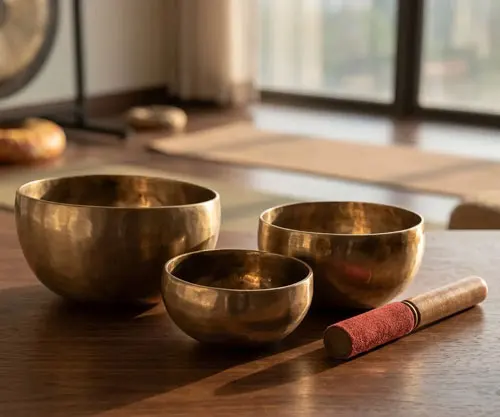
This is the question we hear most often.
Many people expect there to be one "correct" choice, but there is no such thing.
If you are purchasing a singing bowl for relaxation, meditation, or personal ritual, choose based on the sound. It should feel pleasant and help you settle into a quiet state of mind.
Choose a size that suits your intended use:
- Small bowls are convenient for quick meditations and are easy to travel with.
- Medium bowls are the most versatile and are an excellent choice for a first purchase.
- Large bowls produce deeper tones and longer sustain, making them ideal for sound baths and extended meditation sessions.
If you are unsure which is right for you, contact us. We are happy to provide sound samples so you can compare them from the comfort of your home.
Must a Singing Bowl be Made of Seven Metals?
You will find many articles online discussing the "seven metals" and their symbolic meanings. While this tradition has roots, the number of metals is not a true indicator of a bowl’s quality.
The craftsmanship, the technique used in forging, and the final sound are far more significant. A well-crafted hand-hammered bowl typically produces a richer, more pleasing tone than a poorly made one, regardless of the alloy composition.
How to Play a Tibetan Singing Bowl
Many people assume playing a singing bowl requires special skill, but it is actually quite straightforward.
If you are new to this, we recommend watching our short video. It demonstrates how to use a gentle strike and the circular motion of the striker to create that signature sound. Seeing the technique makes it much easier to replicate.
If you are interested in our current selection of Tibetan singing bowls, browse our models and then use these tips to practice.
Place your bowl on a soft surface or hold it on an open palm. First, strike the bowl gently with the mallet and let the sound sustain until it fades completely.
To create a continuous tone, guide the mallet slowly and steadily around the outer rim of the bowl. Keep your motion relaxed and calm. If it does not work perfectly on your first try, do not be discouraged—the feel for it comes with a little practice.
When to Use Your Singing Bowl
There are no rigid rules for using a singing bowl.
Some people start their day with a single tone; others use it to transition into yoga or meditation. Many simply enjoy a few minutes of soothing sound to create a tranquil evening atmosphere.
That is the beauty of it: you do not need specific training or experience. Taking a few minutes for yourself is enough.
How to Care for Your Singing Bowl
Maintenance is minimal. Wipe the bowl with a soft, dry cloth after use and store it in a dry place. Avoid hard impacts or drops, as these can damage the rim and affect the bowl’s resonance.
With proper care, a high-quality singing bowl will accompany you for many years.
Our Recommendation
If we could offer only one piece of advice, it would be this: do not choose based on a photo, an engraving, or the number of metals. Choose based on the sound.
If you are able, visit us to experience our Tibetan singing bowls in person. If not, reach out to us. We will happily prepare a sound recording for you, because we believe the sound is what leads you to the right one.
Final Thoughts
A Tibetan singing bowl is not a magical object that will change your life overnight.
However, it is a wonderful tool that invites you to pause and find stillness every day. In a world defined by constant noise, notifications, and rushing, sometimes a single tone is enough to help you breathe more deeply and stop for a moment.
Perhaps that is why its sound is so special—not because it is mysterious, but because it reminds you to make time for yourself.
 Stay Connected