

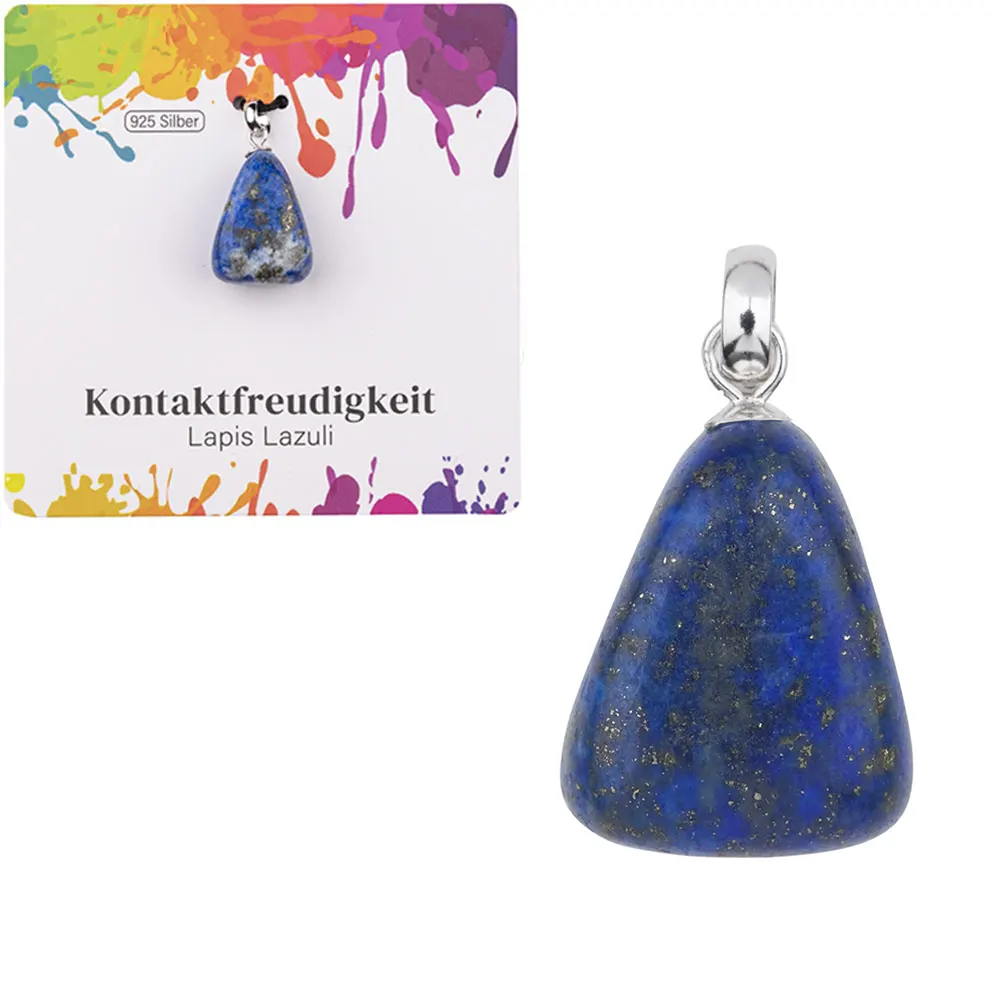
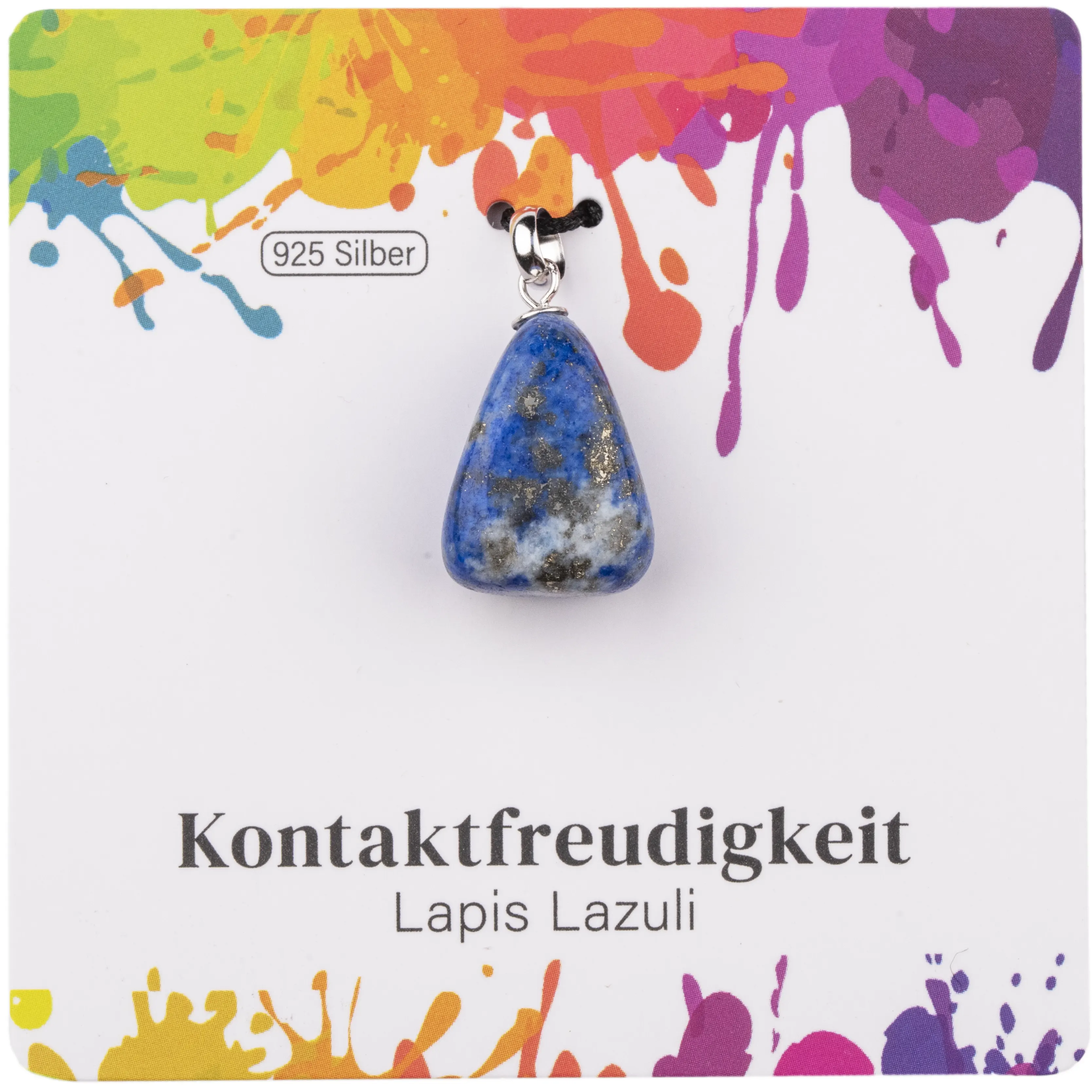


Lapis Lazuli Silver Pendant – Sociability is an elegant piece of jewelry featuring a natural semi-precious stone of intense blue color, symbolizing truth, open communication, and connection between people. Smoothly polished lapis lazuli, with its deep blue tone and characteristic golden inclusions of pyrite, appears expressive yet calming. Traditionally, it is regarded as a stone of sociability, confident self-expression, and inner wisdom, making it a popular personal talisman and a meaningful gift.
General characteristics
- Jewelry type: pendant with silver bail
- Stone: natural lapis lazuli
- Color: intense blue with golden (pyrite) and white inclusions
- Polished stone size: approx. 2.0–2.5 cm
- Total pendant length: approx. 2.5–3.0 cm
- Bail material: rhodium-plated 925 silver
- Inner bail diameter: approx. 4.5 mm
- Chain: not included
Material and craftsmanship
The pendant consists of a natural polished lapis lazuli stone with a silver bail firmly attached at the top, made of rhodium-plated 925 silver. Rhodium plating provides increased resistance to tarnishing and long-lasting aesthetic durability.
Lapis lazuli – symbolism and energetic meaning
Lapis lazuli is a stone of truth, sociability, and clear communication. It encourages the expression of inner truth, self-awareness, and courage in communication. It helps release inner tension, promotes sincere relationships, and strengthens a sense of trust. It is often used as support for personal growth, creative expression, and connecting with others.
Geological properties
Lapis lazuli is a rock composed mainly of lazurite, calcite, pyrite, and sodalite. Its characteristic blue color can vary in intensity and is accompanied by natural golden pyrite inclusions and white calcite veins. On the Mohs scale, it has a hardness of 5–5.5, making it suitable for jewelry with proper care.
Chakras, element, and astrology
Chakras: Throat (Vishuddha), Third Eye (Ajna)
Element: Water
Zodiac signs: Taurus, Sagittarius
Lapis Lazuli in Ancient Cultures
Lapis lazuli is known as one of the most revered and sacred stones of the ancient world. Cultures used it for ritual, protective, and royal purposes:
- Ancient Egypt: It was considered a stone of divinity, the night sky, and rebirth. Egyptians carved Eye of Horus amulets and heart scarabs for burial rituals from it, and used its powder as ritual makeup. They associated it with the soul of the gods Ra and Osiris.
- Mesopotamia and Sumer: Associated with the goddess Inanna (Ishtar), it was believed to contain divine life force. It was used for cylinder seals and protective amulets against curses.
- Tibet and India: Connected with the Medicine Buddha (Bhaisajyaguru). In Tibetan Buddhism, it was used in meditation to open the third eye, clear the mind, and dispel negative influences.
- Ancient Greece and Rome: It served as an amulet for protection against the evil eye (malocchio) and as a symbol of social power and royal authority.
Care and cleansing
You can read about different methods of cleansing stones in our blog post. Choose gentle methods suitable for natural stone and silver.
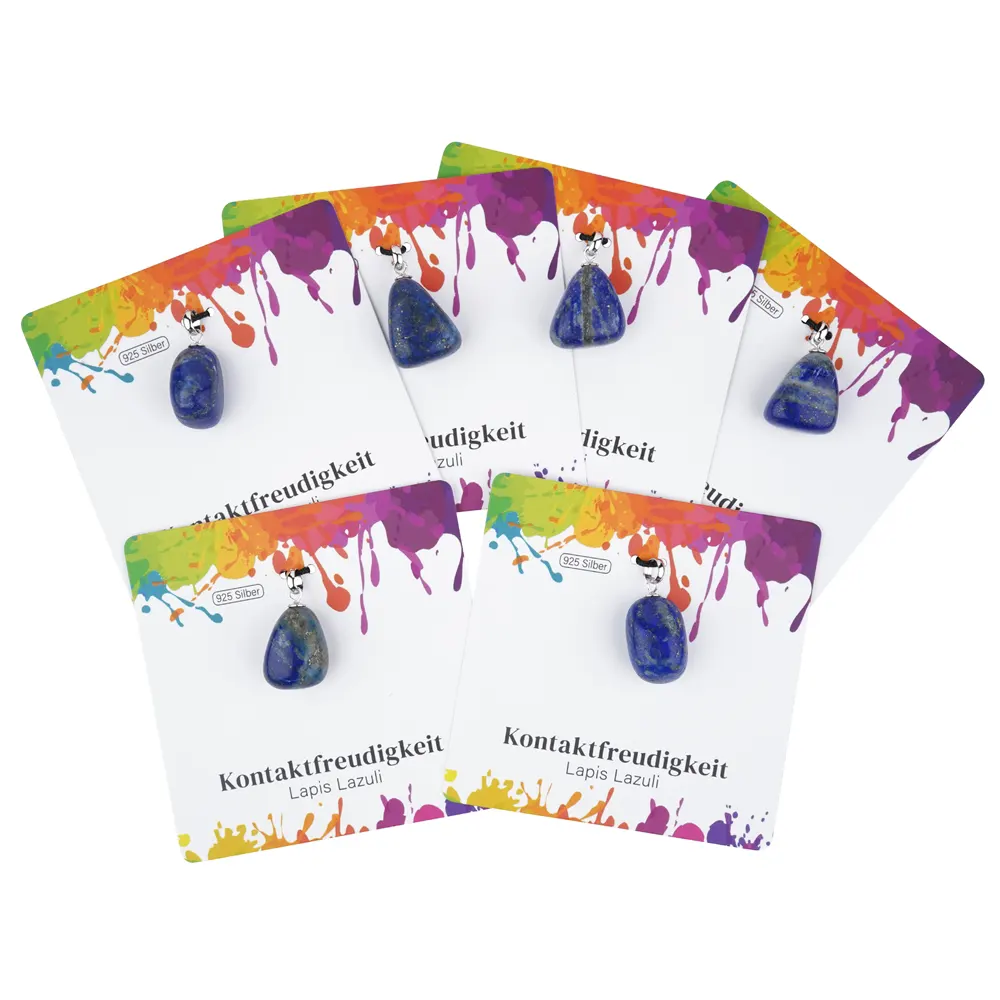
The photograph is symbolic. As this is a natural stone, individual pendants may vary slightly in shade, pattern, and shape.
No reviews found
 Stay Connected