

Tibetan Singing Bowl – How to Choose the Right One
01.07.2026
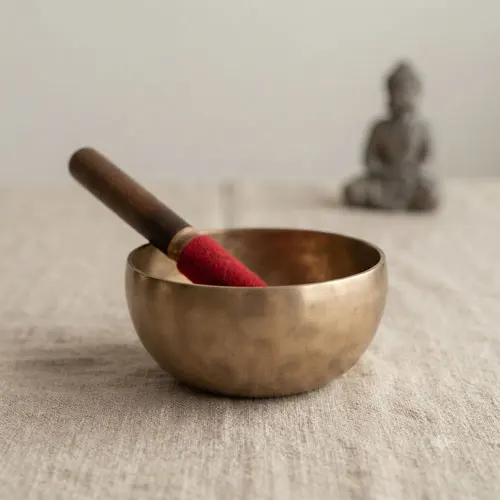
If you have been considering purchasing a Tibetan singing bowl, you have likely noticed that the options can feel overwhelming. With various sizes, intricate engravings, and distinct shapes, it often feels as though there is a complex set of rules to follow before making your first purchase. In truth, finding the right bowl is far simpler than it appears.
One of the most common dilemmas shoppers face is how to choose a Tibetan singing bowl online. While photos can display a bowl’s aesthetic, shape, and size, they cannot convey the most important quality: the sound.
For this reason, we always encourage visitors to stop by, listen to our collection in person, and find the bowl that resonates with them. Often, a customer is drawn to a bowl they would never have chosen based on a photo alone. If a visit is not possible, we are always happy to prepare a sound recording of any specific bowl. This allows you to hear its unique tone, resonance, and character before you commit.
In our experience, the sound is ultimately what guides you to your perfect singing bowl.
What is a Tibetan Singing Bowl?
Although they are known as Tibetan singing bowls, most today originate from Nepal and northern India, where traditional craftsmanship continues to thrive.
These metal vessels create a rich, multi-layered, and long-lasting tone when struck gently or circled with a wooden striker. This distinctive sound has been utilized for centuries in meditation, yoga, and various spiritual practices.
Today, people incorporate them into their daily routines at home—not necessarily as seasoned meditators, but as individuals seeking a few minutes of soothing sound to release tension and find calm after a busy day.
Why Sound Outperforms Aesthetics
Many shoppers begin their search by focusing on engravings. Symbols like the Om, Buddha, lotus, or mandalas undeniably make a singing bowl look beautiful.
However, engravings do not dictate the sound. Similarly, a larger bowl is not inherently better than a smaller one. Sound quality depends on the craftsmanship, shape, thickness of the metal, and above all, how the individual piece resonates.
Consequently, two nearly identical bowls can evoke entirely different feelings. One may offer a deep, warm tone, while another is clear and bright. There is no right or wrong choice—it is simply about which one speaks to you.
How to Choose Your First Singing Bowl
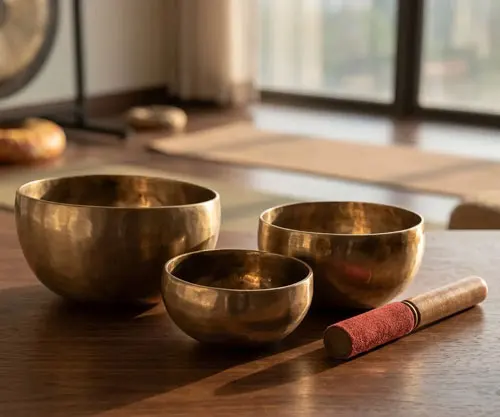
This is the question we hear most often.
Many people expect there to be one "correct" choice, but there is no such thing.
If you are purchasing a singing bowl for relaxation, meditation, or personal ritual, choose based on the sound. It should feel pleasant and help you settle into a quiet state of mind.
Choose a size that suits your intended use:
- Small bowls are convenient for quick meditations and are easy to travel with.
- Medium bowls are the most versatile and are an excellent choice for a first purchase.
- Large bowls produce deeper tones and longer sustain, making them ideal for sound baths and extended meditation sessions.
If you are unsure which is right for you, contact us. We are happy to provide sound samples so you can compare them from the comfort of your home.
Must a Singing Bowl be Made of Seven Metals?
You will find many articles online discussing the "seven metals" and their symbolic meanings. While this tradition has roots, the number of metals is not a true indicator of a bowl’s quality.
The craftsmanship, the technique used in forging, and the final sound are far more significant. A well-crafted hand-hammered bowl typically produces a richer, more pleasing tone than a poorly made one, regardless of the alloy composition.
How to Play a Tibetan Singing Bowl
Many people assume playing a singing bowl requires special skill, but it is actually quite straightforward.
If you are new to this, we recommend watching our short video. It demonstrates how to use a gentle strike and the circular motion of the striker to create that signature sound. Seeing the technique makes it much easier to replicate.
If you are interested in our current selection of Tibetan singing bowls, browse our models and then use these tips to practice.
Place your bowl on a soft surface or hold it on an open palm. First, strike the bowl gently with the mallet and let the sound sustain until it fades completely.
To create a continuous tone, guide the mallet slowly and steadily around the outer rim of the bowl. Keep your motion relaxed and calm. If it does not work perfectly on your first try, do not be discouraged—the feel for it comes with a little practice.
When to Use Your Singing Bowl
There are no rigid rules for using a singing bowl.
Some people start their day with a single tone; others use it to transition into yoga or meditation. Many simply enjoy a few minutes of soothing sound to create a tranquil evening atmosphere.
That is the beauty of it: you do not need specific training or experience. Taking a few minutes for yourself is enough.
How to Care for Your Singing Bowl
Maintenance is minimal. Wipe the bowl with a soft, dry cloth after use and store it in a dry place. Avoid hard impacts or drops, as these can damage the rim and affect the bowl’s resonance.
With proper care, a high-quality singing bowl will accompany you for many years.
Our Recommendation
If we could offer only one piece of advice, it would be this: do not choose based on a photo, an engraving, or the number of metals. Choose based on the sound.
If you are able, visit us to experience our Tibetan singing bowls in person. If not, reach out to us. We will happily prepare a sound recording for you, because we believe the sound is what leads you to the right one.
Final Thoughts
A Tibetan singing bowl is not a magical object that will change your life overnight.
However, it is a wonderful tool that invites you to pause and find stillness every day. In a world defined by constant noise, notifications, and rushing, sometimes a single tone is enough to help you breathe more deeply and stop for a moment.
Perhaps that is why its sound is so special—not because it is mysterious, but because it reminds you to make time for yourself.
Sandalwood: Mystical Aroma for Relaxation and Meditation
16.12.2025
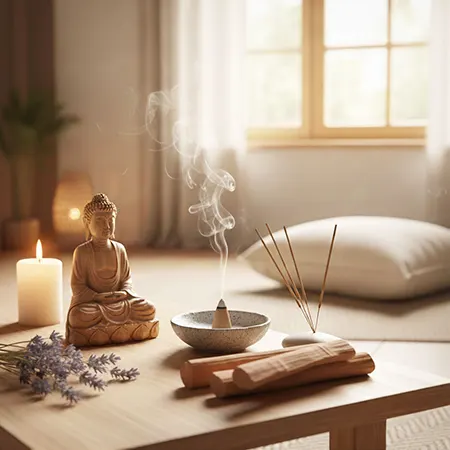
Sandalwood (Santalum album) as incense and aroma has captivated people for centuries with its warm, sweet and woody fragrance. True sandalwood, however, is rare and difficult to obtain, as excessive harvesting in India over the last decades has greatly reduced the tree population. Much of the “sandalwood” found on the market is often not genuine Santalum album. This is why finding high‑quality, authentic sandalwood is a true art.
Tulsi - Holy Basil
18.04.2023
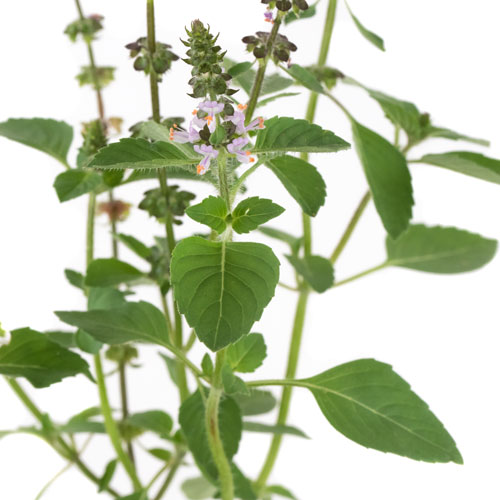
What is Tulsi?
Tulsi or holy basil is a flowering plant from the mint family with wonderful aromatic leaves.
Origin of Tulsi
Tulsi originates from the Indian subcontinent. Organic India grows tulsi basil in the Uttar Pradesh region, located in northern India at the foot of the Himalayas. It most likely originated from these areas but also grows elsewhere in the Indian subcontinent, Bangladesh, eastern Nepal, China, and much of Southeast Asia.
Properties of Tulsi
Stress relief: Tulsi is considered an adaptogenic herb that supports the body in managing physical and mental stress.
Immune system support: Tulsi basil leaves contain phytochemicals shown to support healthy immune system function.
Detoxification: Research shows it helps with internal cleansing and detoxification, and can support healthy digestion and elimination.
Relaxation: Calming and meditative effect
Protection: Tulsi can help protect the body from toxins and environmental pollutants.
Mental clarity: According to Indian tradition, it brings greater clarity and awareness.
Traditional Use of Tulsi
Tulsi is a symbol of purity in various cultures. It has been used for physical, mental, and spiritual purposes. In traditional folk medicine, it was used to support the immune and respiratory systems, kidney function, heart health, oral health, eyes, and much more. Leaves were prepared in various classical and home remedies such as extracts, powders, and teas.
Traditional Significance of Tulsi
In the ancient Vedic text Bhagavata Purana, Tulsi, also called "Queen of Herbs," is mentioned as the plant incarnation of Lakshmi, wife of Vishnu - goddess of abundance and generosity. In Hindu mythology, Tulsi is considered living gates between heaven and earth, and there is a belief that it is the divine manifestation in the plant kingdom. But Tulsi was not only important in India; when it spread to the West via early trade routes from Asia to Europe, Christians also knew it as "holy" basil and used it in rituals.
Who is Holy Basil - Tulsi for?
Tulsi supplements and tulsi teas are intended for everyone who wants to feel better, relax more easily, and think more clearly. It can be an excellent ally in stress management. Children, pregnant, and breastfeeding women should not consume tulsi basil. If taking pharmaceutical medications, consult your doctor before using Tulsi.
Amalaki ali amla v ajurvedi
24.03.2023
Amla ali amalaki
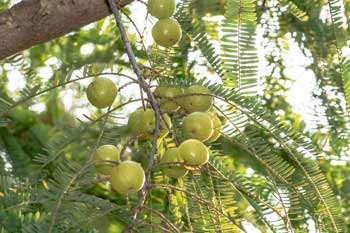
Latinsko ime: Phyllanthus amblica
Slovensko ime: indijska kosmulja
Druga imena: Amalaki, Abhaya, Amrita, Dhatri, Vayastha, Tisyaphala, Sitaphala
Uporabljen del rastline: sadež
Rastišče: Indija, JV Azija
Okus: bolj kisel a vsebuje vse okuse razen slanega
Vpliv na doše: VP-, K+
Tpliv na tkiva: vsa, povečuje odžas (ojas -esenca vitalnosti)
Delovanje: afrodizično, astringentno, laksativno, hemostatično, hranilni tonik, hladilno, pomlajevalno (za pito)
Duhovne koristi: zaradi sattvične (čiste) kvalitete ima dobrodejen vpliv. Pomirja jezo in uravnoteža čustva.
Uporaba v ajurvedi: za vsa pitta stanja
Previdnost: preveliki odmerki lahko povzročijo drisko, slabost ali glavobol.
Amla je eden najboljših naravnih virov C vitamina.
Phyllanthus emblica je drevo, ki raste v Indiji in jugovzhodni Aziji, znan pa je tudi pod imenom "amla" ali "indijska kosmulja". Rastlina doseže višino približno 20 metrov in ima sivo-rjavo lubje. Listi so svetlo zeleni. Cvetovi so majhni, rumeno-zeleni, brez vonja in se pojavijo v listnih 'pazduhah'. Plodovi, ki so okrogli, imajo premer približno 2-3 cm, so zeleni in postanejo rumeno-rjavi, ko dozorijo. Sadeži so kislega okusa in so bogati z vitaminom C.
Phyllanthus emblica ima v ajurvedski medicini pomembno mesto, saj se uporablja že več tisoč let. V ajurvedski medicini se uporabljajo tako plodovi kot listi in korenine te rastline. Uporaba amalakija se razteza na različna področja ajurvedske medicine. Najpogosteje se uporablja za izboljšanje prebave in prebavnih težav, saj ima zelo visoko vsebnost vitamina C, ki pomaga pri razstrupljanju telesa in izboljšuje absorpcijo hranil. Amalaki se prav tako uporablja kot imunski stimulant, saj vsebuje veliko antioksidantov in ima protivnetne lastnosti.
Amla ima v ajurvedski medicini številne koristne lastnosti, ki vključujejo:
Antioksidativno delovanje: amla je bogata z antioksidanti, ki pomagajo zaščititi celice pred prostimi radikali, ki lahko poškodujejo celice in povzročijo škodo na DNK.
Podpira prebavni sistem: amla pomaga pri spodbujanju prebave, odpravljanju zaprtja in zmanjševanju vnetij v prebavilih.
Krepi imunski sistem: amla je bogata z vitaminom C, ki je pomemben za delovanje imunskega sistema. Prav tako lahko pomaga pri preprečevanju okužb.
Uravnava krvni sladkor: amla ima hipoglikemični učinek, ki lahko pomaga pri uravnavanju krvnega sladkorja.
Pomaga pri težavah s kožo: amla se lahko uporablja tudi za zdravljenje kožnih bolezni, kot so akne, ekcem in luskavica.
Podpira zdravje las: amla se lahko uporablja tudi za spodbujanje rasti las in izboljšanje njihovega videza. Prav tako lahko pomaga pri preprečevanju izpadanja las in sivenju las.
Pomaga pri uravnavanju holesterola: amla lahko pomaga pri zniževanju holesterola v krvi, kar lahko zmanjša tveganje za srčne bolezni.
Če želite amlo uporabljate za zdravljenje, se po nasvet obrnite k usposobljenemu strokovnjaku.
Latinsko ime: Phyllanthus amblica
Slovensko ime: indijska kosmulja
Druga imena: Amalaki, Abhaya, Amrita, Dhatri, Vayastha, Tisyaphala, Sitaphala
Uporabljen del rastline: sadež
Rastišče: Indija, JV Azija
Okus: bolj kisel a vsebuje vse okuse razen slanega
Vpliv na doše: VP-, K+
Tpliv na tkiva: vsa, povečuje odžas (ojas -esenca vitalnosti)
Delovanje: afrodizično, astringentno, laksativno, hemostatično, hranilni tonik, hladilno, pomlajevalno (za pito)
Duhovne koristi: zaradi sattvične (čiste) kvalitete ima dobrodejen vpliv. Pomirja jezo in uravnoteža čustva.
Uporaba v ajurvedi: za vsa pitta stanja
Previdnost: preveliki odmerki lahko povzročijo drisko, slabost ali glavobol.
Amla je eden najboljših naravnih virov C vitamina.
Phyllanthus emblica je drevo, ki raste v Indiji in jugovzhodni Aziji, znan pa je tudi pod imenom "amla" ali "indijska kosmulja". Rastlina doseže višino približno 20 metrov in ima sivo-rjavo lubje. Listi so svetlo zeleni. Cvetovi so majhni, rumeno-zeleni, brez vonja in se pojavijo v listnih 'pazduhah'. Plodovi, ki so okrogli, imajo premer približno 2-3 cm, so zeleni in postanejo rumeno-rjavi, ko dozorijo. Sadeži so kislega okusa in so bogati z vitaminom C.
Phyllanthus emblica ima v ajurvedski medicini pomembno mesto, saj se uporablja že več tisoč let. V ajurvedski medicini se uporabljajo tako plodovi kot listi in korenine te rastline. Uporaba amalakija se razteza na različna področja ajurvedske medicine. Najpogosteje se uporablja za izboljšanje prebave in prebavnih težav, saj ima zelo visoko vsebnost vitamina C, ki pomaga pri razstrupljanju telesa in izboljšuje absorpcijo hranil. Amalaki se prav tako uporablja kot imunski stimulant, saj vsebuje veliko antioksidantov in ima protivnetne lastnosti.
Amla ima v ajurvedski medicini številne koristne lastnosti, ki vključujejo:
Antioksidativno delovanje: amla je bogata z antioksidanti, ki pomagajo zaščititi celice pred prostimi radikali, ki lahko poškodujejo celice in povzročijo škodo na DNK.
Podpira prebavni sistem: amla pomaga pri spodbujanju prebave, odpravljanju zaprtja in zmanjševanju vnetij v prebavilih.
Krepi imunski sistem: amla je bogata z vitaminom C, ki je pomemben za delovanje imunskega sistema. Prav tako lahko pomaga pri preprečevanju okužb.
Uravnava krvni sladkor: amla ima hipoglikemični učinek, ki lahko pomaga pri uravnavanju krvnega sladkorja.
Pomaga pri težavah s kožo: amla se lahko uporablja tudi za zdravljenje kožnih bolezni, kot so akne, ekcem in luskavica.
Podpira zdravje las: amla se lahko uporablja tudi za spodbujanje rasti las in izboljšanje njihovega videza. Prav tako lahko pomaga pri preprečevanju izpadanja las in sivenju las.
Pomaga pri uravnavanju holesterola: amla lahko pomaga pri zniževanju holesterola v krvi, kar lahko zmanjša tveganje za srčne bolezni.
Če želite amlo uporabljate za zdravljenje, se po nasvet obrnite k usposobljenemu strokovnjaku.
The World of Incense
23.11.2022
"As the smoke rises, we bless this house and commend it to God's care"—with these words, our grandmother would smudge the entire house from the cellar to the attic every Christmas Eve. She would use a small shovel to scoop up a few glowing embers from the wood-burning stove and sprinkle the incense over them. I used to follow her around, completely captivated, and when she was no longer with us, I took over this 'fun' tradition myself. Over time, it grew into something much deeper. Today, it is no longer just a fond memory of my dear grandmother, but a sacred ritual that always brings a sense of magic, reverence, and peace into our home.
When we first started selling incense at our shop in the BTC commercial district decades ago, we only sold a handful of pieces, and even then, mostly right before Christmas. Over the years, however, interest has steadily grown, and I am thrilled to see incense making such a meaningful comeback. In truth, incense has been our companion since time immemorial. No matter which ancient culture you look into, aromatic smoke has always played a vital role. Today, we are simply witnessing its grand revival.
The tradition of burning aromatic plants is one of humanity's most natural rituals. Historically, its purpose was always deeply intertwined with preserving and protecting life. Whether used to support physical, mental, or emotional well-being, or to shield against pathogens, the practice ran deep. It served as a method for preserving food, as well as a sacred accompaniment to religious, spiritual, and even magical ceremonies.
Fragrances have a profound way of affecting us, and our response to them is shaped by our past experiences. Whether triggering primal instincts or buried childhood memories, scents can awaken and activate various aspects of our inner world. Regardless of whether a scent brings up a pleasant or uncomfortable feeling, it delivers a clear message: something is locked away in the basement of our subconscious, longing to be set free.
It is truly fascinating how many people have suddenly found themselves completely captivated by the world of incense, as if something precious and long-forgotten is carving its way back into our collective consciousness. When practiced mindfully, an incense ritual—much like a traditional tea ceremony—can make time stand still, anchoring us completely in the here and now. It allows us to break away from the mechanical routine of daily life and step into a timeless space, if only for a moment. The effects are often profound, sparking subtle inner transformations and a deeper sense of self-awareness. Exploring different incenses opens up a whole new world of rich, grounding impressions.
A Global History of Incense
Ancient Egypt
In Ancient Egypt, a day without incense was considered a day wasted. They would burn frankincense (olibanum) in the morning, myrrh at noon, and a carefully crafted blend called kyphi in the evening. As the Roman historian Plutarch noted, kyphi was burned at nightfall because it gently lulled the residents to sleep, brought sweet dreams, and washed away the worries of the day.
Japan
The Japanese elevated the use of aromatics into a sublime art form. With an extraordinary eye for detail and aesthetics, they developed a sophisticated incense culture known as Kōdō (Way of Incense), which stands as one of Japan's three traditional arts of refinement. Kodo translates to the art of burning incense and appreciating its aroma. In this tradition, they say incense is not something you merely "smell," but something you "listen to." There are two primary ways to experience incense in Kodo: "Monko," where you deeply listen to and appreciate the fragrance, and "Kumiko," a game-like ritual where you listen to identify specific scents. The most prized aromatic materials in Japan include agarwood (jinko), sandalwood, cinnamon bark, cloves, ginger lily, lavender, licorice, patchouli, saffron, Himalayan valerian, and star anise.
North America
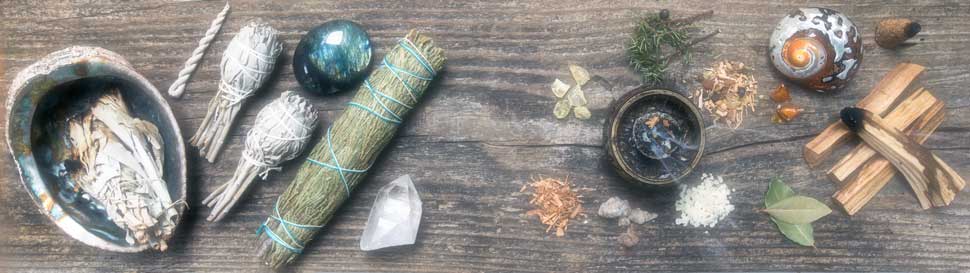
For the Indigenous peoples of North America, ceremonial smoke has always held a sacred place in daily and spiritual life. Through smudging ceremonies utilizing powerful sacred plants like white sage, juniper, sweetgrass, tobacco, or cedar, they restore their connection to nature as a whole and to the Great Spirit. These sacred plants are used to cleanse, heal, and bless people and spaces.
To learn more about the deep cultural significance of this tradition, watch Stephen Augustine explain the Smudging Ceremony.
South America
Among the indigenous cultures of South America, incense has been an essential part of both daily routines and spiritual practices for centuries. The most prominent aromatics in this tradition are copal, tolu balsam, and palo santo (holy wood), harvested from the Bursera graveolens tree—often used in the form of natural wood sticks.
Palo santo is celebrated for its uplifting aroma, which beautifully blends woody, citrus, and subtle minty notes. It is traditionally used to enhance meditation, promote relaxation, and clear negative energy during rituals. The most potent and sacred wood comes exclusively from naturally fallen trees and branches that have aged on the forest floor for several years, allowing the aromatic resins and essential oils to fully crystallize.
Today, this "holy wood" is cherished worldwide and can be enjoyed as raw sticks, resin, incense cones, or even worn as meaningful jewelry. It is a popular choice for anyone looking to clear their space and create a serene atmosphere. You can explore all the different varieties and options in our complete Palo Santo collection.
India
In India, some of the earliest records of smoke purification can be found in the ancient Vedas. Written in Sanskrit, these sacred Hindu texts detail the use of incense as a therapeutic tool to aid recovery from illness and to create a pristine, tranquil environment that fosters deep healing.
The most revered incenses in India include sandalwood, agarwood, and Indian frankincense (Boswellia serrata).
Africa
Throughout Africa, traditional healers and spiritual leaders have long burned sacred herbs over hot charcoal or cast herbal powders directly into ritual fires. The rich smoke would envelop individuals in a therapeutic "smoke bath" to cleanse their energy.
In West Africa, plants like N'tabanokò (Cola cordifolia), Ganianko (Combretum molle), and Nèrè (Parkia biglobosa) are widely used.
In South Africa, the sacred herb Imphepho (Helichrysum odoratissimum) has been used in rituals since ancient times and remains a cornerstone of spiritual practices today.
China and East Asia
In Ancient China and across East Asia, incense has always been a constant presence in Buddhist, Taoist, and Shinto temples, as well as a vital element of ancestor worship. The most significant aromatics in this region include agarwood, sandalwood, benzoin, camphor, frankincense, cloves, cinnamon, amber, magnolia, peony, and cypress.
Australia
The Aboriginal peoples of Australia have practiced traditional smoking ceremonies for millennia to promote health, well-being, protection, and a deep grounding connection to Mother Earth. These ceremonies mark all major life transitions, from birth (to protect both mother and newborn) to death. Smoking ceremonies are also performed as a warm, protective gesture to welcome visitors to Country.
Conducting a smoking ceremony for someone is considered a profound gift and blessing.
The traditional botanicals used include eucalyptus, Australian sandalwood, emu bush (Eremophila longifolia), cauliflower bush (Cassinia longifolia), wild peppermint, and other native herbs.
The National Museum of Australia captured a beautiful short film detailing this living tradition, which you can watch here: Adrian Brown on smoking ceremonies.
Europe and Slovenia
The Celts kindled ritual fires using juniper, rowan, and elderberry. Saining is an ancient Celtic practice where fire and water are used to invoke the protective spirits of the botanical world to cleanse or heal a person, animal, place, or entire community. Community members would take turns passing through or jumping over the smoke for purification and protection, and livestock would be driven through it before the smoke was brought into the home. This ritual also marked milestones like births, marriages, and funerals.
In medieval Europe, people burned rosemary in their homes to ward off the plague and other infectious diseases. Even well into the 20th century, French physicians recommended burning rosemary and thyme in hospital wards to purify the air.
In Slovenia, the Old Believers (pagan traditionalists) of the Soča Valley used fresh juniper and laurel branches, rosemary, and pine resin for their sacred smoke rituals. In other regions, people relied heavily on whichever aromatic plants grew abundantly in their immediate surroundings.
Smoke rituals are profoundly beautiful. They offer us a way to align with the forces of nature and connect with our deeper self, clearing away stagnant energies while providing a sense of comfort and protection. We encourage you to explore your own heritage and discover your botanical allies—many of which might be growing right in your backyard or a nearby forest. When we approach nature with reverence, we naturally open ourselves up to her protection, healing, and blessings.
The Element of Fire
Fire is a primal force of nature—it is the ultimate catalyst for transformation and change. Fire breaks down the old to clear a path for the new, acting as a powerful agent of purification and rebirth. This elemental connection is becoming increasingly recognized in the West, as seen in the rising interest in shamanic healing and purification rituals like firewalking and traditional Native American sweat lodges. All of these profound experiences revolve around fire.
Sitting by an open flame naturally stirs an enchanting, deeply calming feeling within us. Although modern heating and cooking methods have largely removed open fire from our living spaces, many people are consciously choosing to bring it back. The tradition of lighting midsummer bonfires and gathering around campfires remains as vibrant as ever. Fire can be a wise teacher, reminding us of the impermanent nature of our physical world. However, the most important rule when working with fire is absolute respect. Without mindfulness and care, it can easily burn us.
Fire is also the essential element required to enjoy loose incense. Without a flame or glowing charcoal, we cannot transform raw botanicals into aromatic smoke. Scent is a subtle, invisible force capable of shifting our perception, and fire is the energy that initiates that alchemy. The smoke arising from smoldering botanicals is like the soul of the plant being set free. As moisture evaporates and rises as a visible plume of smoke, it carries the plant's true essence into the air. This is a beautiful alchemical process where the spirit of the plant detaches from its coarse material body, becoming tangible to our senses as an ethereal substance.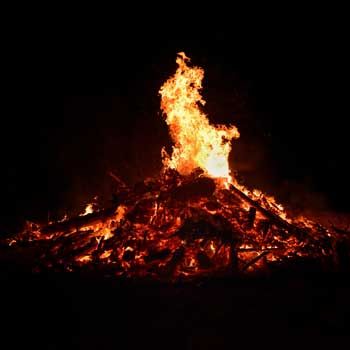
How Incense Affects Us
Through our olfactory system, incense bypasses the analytical mind to directly influence our psychological and emotional states. Scents trigger immediate emotional reactions—we either instinctively love a fragrance or dislike it. If you are instantly drawn to a specific aroma, you can look at it as a signal from your body that you need that particular quality to restore inner balance. It shows that you are open to the healing properties of that plant. By embracing its power, you allow it to work its magic on you. Always choose fragrances that truly make your heart sing; you can never go wrong that way. Over time, you might also want to gently explore scents that initially repelled you. Unlocking their mystery often requires finding the right inner key, a journey deeply tied to self-discovery. Regularly burning incense that brings you joy helps release tension and harmonizes the body, mind, and soul. Gradually, as your energy flows more freely and your inner strength grows, you may find yourself opening up to fragrances and qualities that once felt uncomfortable. Your experience with incense will always be shaped by your current state of mind and your intention. Lighting incense naturally creates a bridge to subtler dimensions, lifting our worries to higher realms where support and clarity reside. The same is true for our prayers and positive wishes; incense serves as a vehicle to enter the metaphysical realm of creative energy, the very source where all manifestation begins.
Methods and Accessories for Burning Incense
Over thousands of years of human history, countless methods for preparing and burning incense have evolved. Yet, despite these diverse origins, traditional techniques remain remarkably similar across the globe.
Classic Incense Sticks
Incense sticks are incredibly popular due to their sheer practicality. Simply light the tip, let it flame for a few seconds, and gently blow it out if it doesn't extinguish on its own. The stick will slowly smolder from the top down, filling your room with its fragrance. This convenient method is believed to have been originally developed by Buddhist monks in India.
Generally speaking, there are two main categories of incense sticks:
1. Cored Sticks (with a bamboo or wooden core)
These are the most common types of incense, heavily associated with India. They are crafted by coating the top two-thirds of a thin bamboo stick with a moist paste made from high-quality aromatic wood powder (such as sandalwood, cedar, or agarwood). This base is blended with natural gum binders, pulverized herbs, or pure essential oils. Once the paste dries, the sticks are ready. While some modern incense sticks are dipped in synthetic perfumes to create exotic scents, it is always best to let your nose guide you toward natural quality.
We invite you to browse our curated selection of authentic Indian incense sticks.
2. Solid, Coreless Sticks (without a wooden core)
The production of these sticks is a bit like making pasta—the aromatic herbal paste is extruded into long strands and left to dry completely. The primary advantage of coreless sticks is that you get a completely pure aroma, without the underlying scent of burning bamboo. Some of the purest, most natural coreless incenses come directly from Tibetan and Nepalese traditions. Since these sticks are typically too thick for standard incense holders, they are best enjoyed by standing them upright in a small bowl filled with fine sand. If you want to extinguish the stick early, simply flip it over and push the burning tip into the sand. Japanese incense sticks are also coreless, though they are much thinner than Tibetan ones and usually come with a tiny ceramic burner included in the box. The aroma of Japanese incense is exceptionally subtle, elegant, and sophisticated. Premium manufacturers strictly avoid synthetic fragrances and binders, whereas budget alternatives may include them. The precise, intricate recipes have always been closely guarded artisanal secrets.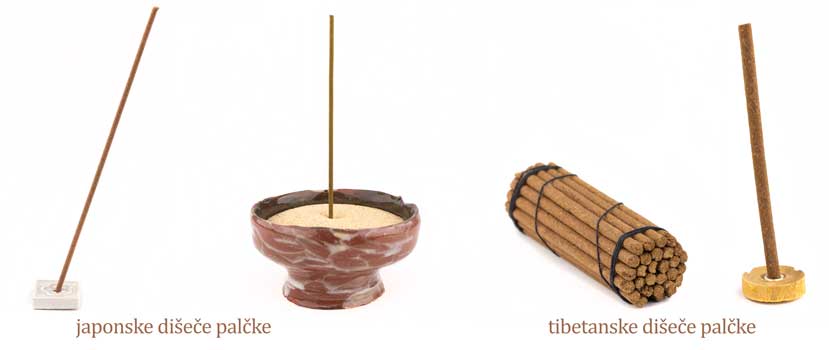
Incense Coils
These are crafted using a similar method to coreless sticks, rolled into a continuous spiral that offers a much longer burn time.
Incense Cones and Other Formats
Incense cones are highly favored for their ease of use. You simply light the pointed tip and let it gently smolder. Cones are crafted across India, Indonesia, Japan, China, and even Europe. Because they do not generate extreme heat at their base, they can be safely placed on a small ceramic coaster, making them excellent travel companions.
Native American Smudge Sticks and Bundles
In Native American traditions, people use dried smudge bundles made from sacred plants like white sage, cedar boughs, juniper twigs, and desert sage. The process begins with harvesting the botanicals mindfully, binding them tightly together, and hanging them in a dry, dark place to cure completely. Ethical, traditional harvesting means gathering the plants on specific days and hours while maintaining a deeply respectful, focused state of mind and offering thanks for the plant's life force. To use, light the top of the bundle, let it catch a good flame, and then wave it gently through the air to extinguish the fire. The bundle will begin to smolder, releasing a thick, aromatic smoke. This smoke is traditionally used to cleanse tipis, homes, sacred objects, and people—clearing away negative energy while bringing healing and blessings.
Sweetgrass is traditionally braided into beautiful tresses, dried, and lit from one end.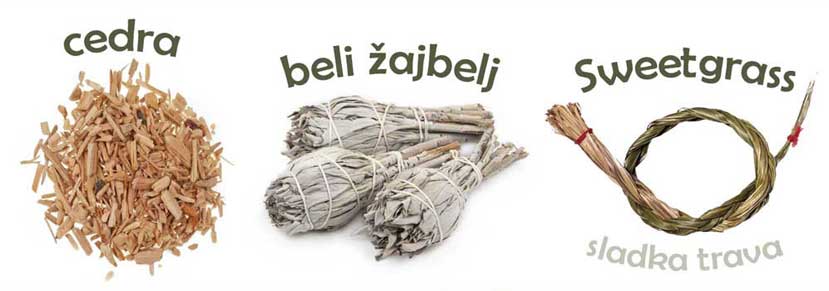
Pure Raw Botanicals and Resins
This category includes raw tree resins, aromatic woods, and dried herbs that are burned on charcoal briquettes, glowing embers, or specialized mesh burners. Burning raw, single-source botanicals allows you to truly get to know the distinct personality of each plant and experience your own unique response to its pure fragrance. The scent released during burning comes primarily from the plant's essential oils, which serve as a means of communication in the natural world. Everyone experiences these fragrances in their own unique way and develops a personal routine, but it helps to learn the standard techniques to find the method that works best for you.
How to Burn Loose Incense
1. Using Incense Charcoal Briquettes
Since most modern homes don't have an open fireplace to source natural embers, specialized incense charcoal briquettes are widely available in various sizes. These round discs feature a small indentation in the center. To light, hold the briquette with a pair of incense tongs and apply a flame to the edge until it begins to crackle and spark. Once it is self-igniting, place it inside a heatproof censer filled with quartz sand or onto the mesh screen of a burner. Carefully spoon a small amount of loose incense into the central indentation; as the charcoal heats up, the botanicals will begin to release their aromatic smoke. The charcoal itself may release a slight odor as it lights, and can burn for up to 40 minutes depending on its size. Because charcoal briquettes easily absorb moisture from the air, always store them in a tightly sealed, dry container.
Standard Incense Bowls (Without Mesh) for Charcoal Use
When burning charcoal, you must use a heatproof vessel that won't damage the surface underneath. We highly recommend using a censer with legs or filling your bowl with quartz sand to insulate the vessel and prevent overheating. Charcoal requires adequate oxygen to stay lit, which is why burners with decorative perforations work beautifully. If using sand, you can lightly score the surface with a fork before placing the charcoal on top to allow better airflow underneath. Censers with handles are exceptionally practical if you plan to carry the smoke from room to room to cleanse your home.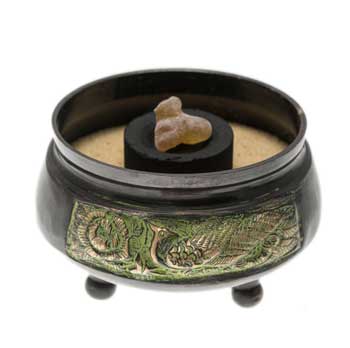
Incense Censers with Wide Mesh Screens for Charcoal Use
These specialized burners feature a wide wire mesh screen on top where the glowing charcoal disc is placed. It is vital to never leave a burning censer unattended until you are completely certain that both the incense and the charcoal have burned out entirely. Keep in mind that certain loose botanicals and resins can be highly flammable, so it is always wise to test a tiny amount first.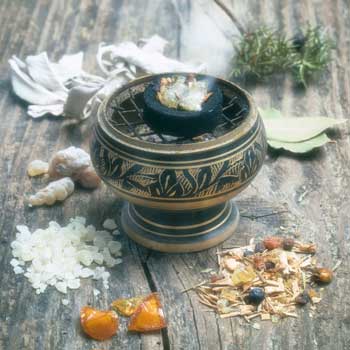
2. Stainless Steel Mesh Burners (Tealight Incense Warmers)
These elegant warmers feature a fine stainless steel mesh screen (sieve) sitting directly above a standard tealight candle. Instead of using charcoal, you place your loose incense or resins directly onto the mesh screen. The flame beneath gently warms and melts the botanicals; because they do not burn aggressively, this method produces much less smoke while delivering a incredibly pure, intense, and clean aroma.
This gentle method is ideal for delicate resins such as myrrh, guggul, frankincense, mastic, sandarac, and benzoin. For softer or more fluid resins (like elemi), it is best to mix them with aromatic wood chips, which will naturally absorb the melting resin.
To maintain your mesh screen, make sure to clean it after it has completely cooled down. Simply press on the underside of the flexible mesh to pop off any hardened resin crust. Any stubborn residue can be burned away by holding the mesh directly over a flame, and finished with a quick scrub using a small wire brush. Because the screen is made of high-quality stainless steel, you can also wash it with a mild dish soap to keep it looking pristine and bright.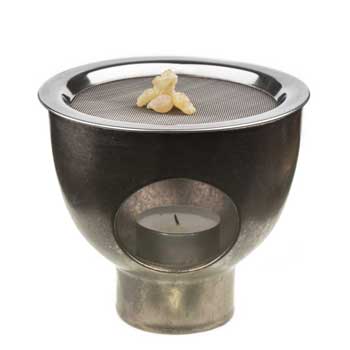
Last updated: June 16, 2026
Kadilo bosvelija
22.10.2019
Frankincense - Boswellia - Olibanum
Boswellia is a medium-sized plant, appearing as either a tree or a shrub, that grows in the arid, desert regions of the subtropical climate zones of Asia and Africa. It is renowned for its fragrant resin, which is most commonly used as incense. Different soil types and climates create a variety of resins, even within a single species. Trees begin to produce resin at the age of 8 to 10 years. The resin is obtained by making a small, shallow incision in the trunk and removing a portion of the bark. A milk-like substance then begins to exude from the cut, which coagulates upon exposure to air. The resin is harvested by hand.
This aromatic resin is highly valued for its medicinal and spiritual properties. It was used in religious ceremonies as early as the ancient Egyptians. True Frankincense incense is derived from all species of Boswellia, with each available in various qualities depending on the harvest period.
Five main species of Boswellia incense:
- Boswellia sacra
- Boswellia frereana
- Boswellia papyrifera
- Boswellia serrata
- Boswellia carteri
Boswellia sacra - Hojari - Sacred Incense
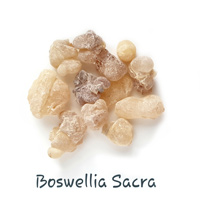 Origin: Arabian countries (Oman, Yemen, also Somalia)
Scent: Fresh, resinous, with a wonderfully light note. Highly prized!
Properties: It is one of the oldest known incenses. The resin of the Boswellia sacra tree is considered the biblical sacred incense, as scriptural history records it as one of the three gifts presented to the newborn Jesus.
Boswellia Sacra purifies the mind, mediates between the material and spiritual worlds, inspires, awakens spirituality, and aids in the manifestation of ideas. It is a precious meditation incense. Used for space clearing, it cleanses a room of negative energies or forces, bringing peace and contentment.
The teardrop-shaped resin pieces are very large and make excellent incense. Due to historical over-exploitation of Boswellia trees in Oman, the government has taken control of the process, strictly limiting international trade of this Frankincense.
You can order Boswellia Sacra incense in various qualities: Green or Royal Hojari or Yellow-White Hojari.
Boswellia frereana or Maydi Frankincense
Origin: Northern SomaliaScent: Deeper, more balsamic and resinous than others
Properties: Boswellia frereana requires limestone-rich soil and thrives in hot climates, but unlike other species, it requires more water and rainfall. This incense is classified into eight grades. The first four are exclusively exported to Saudi Arabia, where the resin is used for chewing, while the others are exported to China for traditional medicine and to Europe (France, Germany, UK) for incense. It is used for relaxation, meditation, and for spiritual and religious rituals.
Boswellia papyrifera or Sudanese Frankincense
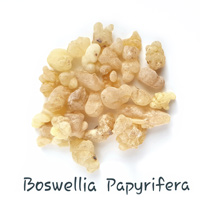
Origin: Central and Eastern Africa (Ethiopia, Eritrea, and Sudan)
Scent: Fresh, lemon-pine note, sweeter than other species
Properties: Since ancient times, it has been used to enhance mental perception, for spiritual purposes, and during meditation and prayer. This incense calms the spirit by slowing and deepening the breath.
Boswellia serrata - Indian Frankincense
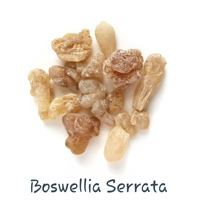 Origin: India
Scent: Fine balsamic, woody aroma
Properties: This incense has long been used for spiritual purposes, meditation, prayer, and awakening consciousness. It clarifies the mind, acts as an anti-stress agent, calms, relaxes, and balances, making it an ideal incense for evening hours. It helps us feel lighter, more present, conscious, and in touch with our true nature.
It produces less smoke than white sage, making it a great alternative for clearing negative vibrations. It can be used to cleanse spaces, objects, and the aura. It fills the room with a sweet, balsamic aroma and positive energy. It has always been valued for its ability to simultaneously cleanse and raise vibrations. In summer, it is useful as a natural insecticide. In India, Grade 1 (1st Choice) is most commonly used in Ayurvedic medicine. Research has shown that boswellic acids have anti-inflammatory effects. The resin is also used in the manufacture of ointments.
You can order Boswellia Serrata at this link.
Boswellia carteri
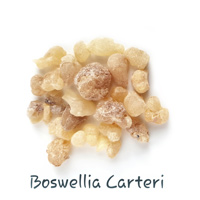 Origin: East Africa and China
Scent: Softer but equally strong, warm woody aroma with sweet, floral undertones.
Properties: Used for millennia for beauty and purification purposes. It raises the vibration in a space and brings a deep sense of comfort and well-being. It is used for relaxation and meditation. Regular use is said to improve memory, reduce inflammation, and promote better sleep. It is said that the spirit of the plant can awaken the divine within us.
You can order Boswellia Carteri at this link.
The Use of Boswellia in Medicine:
Boswellia carteri and Boswellia serrata resins are used to alleviate RA (rheumatoid arthritis), OA (osteoarthritis), ulcerative colitis, Crohn's disease, and other inflammatory diseases. The active components (boswellic acids) have anti-inflammatory and analgesic effects. The anti-cancer effects of boswellic acids are also being studied...
(Source: www.ncbi.nlm.nih.gov/pmc/articles/PMC2664784/)
Boswellia carteri and Boswellia serrata resins are used to alleviate RA (rheumatoid arthritis), OA (osteoarthritis), ulcerative colitis, Crohn's disease, and other inflammatory diseases. The active components (boswellic acids) have anti-inflammatory and analgesic effects. The anti-cancer effects of boswellic acids are also being studied...
(Source: www.ncbi.nlm.nih.gov/pmc/articles/PMC2664784/)
This article is not intended for medical advice but only for information on the possible uses of Boswellia resin. For medical purposes, consult a professional.
Crystal and Tumble Stone Cleansing
10.10.2019
When to Cleanse
When you buy or receive a new stone, crystal, or jewelry with stones, first cleanse and charge it. Stones absorb energies from the environment, so they need regular cleansing and charging. Frequency depends on how often you carry them and what period you're going through. Sometimes daily cleansing is needed. Follow your intuition.
Be cautious when choosing methods, as not all are suitable for every stone type. If in doubt, use water-free and salt-free methods. Water acts like acid on some crystals and stones.
Full Moon
The full moon has particularly powerful effects for cleansing and charging crystals. Leave them overnight outside on the ground or windowsill (even if cloudy). In case of rain, protect sensitive stones in a closed glass jar. This is completely safe for all stones, especially recommended for softer stones like malachite, selenite...
Sun
The sun is also a very powerful method for cleansing crystals. Even in cloudy weather, the crystal will recharge. Be careful, as some stones fade in sunlight (e.g., rose quartz, amethyst). Recommended for softer stones like malachite, selenite...
Mother Earth
Stones and crystals come from the earth, so one of the most natural cleansing and charging methods is burying them in the ground for 24 hours. Wrap jewelry with stones and crystals in cloth and cover with soil.
Running Water
Hold the stone under clean, running water to cleanse and charge it. Natural springs, clean streams, or rivers are ideal. Not suitable for some stones. Can be cleansed in water: agate, amethyst, aventurine, lightning stone, citrine, tiger's eye, red jasper, rose quartz, smoky quartz, snow quartz, turquoise...
Sea Salt
The cleansing effects of sea salt have long been known. Many cleanse stones by placing them directly on natural sea salt. However, be careful - this method is too harsh for softer stones. Not suitable for: hematite, pyrite, and many others. Suitable for quartz crystals.
Salt Water
This method is also not suitable for softer stones. Leave harder stones overnight in a glass filled with purified water and natural sea salt. Stones can also be cleansed with sea water for about a minute. Then rinse, gently wipe, or let air dry. For sensitive stones and jewelry, place them in a small glass jar inside a container of salt water. Ensure water doesn't enter the jar with stones and jewelry. Leave for a few hours or overnight. Salt water not suitable for: hematite, pyrite, and many others. Suitable for quartz crystals.
Incense
Incense provides very effective and safe cleansing for stones and jewelry. Use: white sage, sandalwood, palo santo, cedar, frankincense, or special incense blend. Hold the stone in the incense smoke for 30 seconds to clear negative energy. Incense is one of the safest methods for cleansing crystals and stones.
Sound
For sound cleansing, use singing Tibetan bowl, cymbals, bell, tuning forks, singing... Place small stones in the Tibetan bowl, larger ones nearby. Play the bowl with intention for a few minutes. Completely safe method for all stones and crystals.
Visualization
Visualize a beam of white light cleansing your stone or crystal.
Reiki
Reiki energy cleanses and charges crystals. If you have Reiki level 1, simply hold the stone in your hand and let Reiki energy flow through it. With Reiki level 2, you can use symbols for cleansing crystals.
Intention
Focus your attention on the crystal and ask the universe, higher consciousness, guides, your angel... to cleanse the stone of all negative energies and recharge it to maximum. Don't forget to give thanks.
Other Crystals
Place your stone on a larger lightning stone cluster, which will cleanse negative energies and recharge it. The cleansing lightning stone also needs regular cleansing and charging.
Shamanic Method for Lightning Stone or Quartz Crystal
When selecting a quartz crystal, rinse it in a natural spring or sea. Then store it separately until winter or summer solstice. Take it to a high, isolated hill or peak. Take a wooden stick, split one end, and stick the other end into the ground. Wedge the quartz crystal into the split end and leave it for 8 days to charge.
Uporaba Neem olja
03.09.2017
ČISTO NEEMOVO OLJE – TEKOČE ZLATO NARAVE
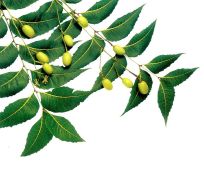 Hladno stiskano olje iz semen indijskega neemovega drevesa ima 4000 letno tradicijo uporabe. Neemovo drevo pogosto imenujejo tudi ' vaška lekarna' ali 'drevo 40 zdravil'.
Sodobna znanost je v neemovem olju identificirala več kot 200 snovi, ki imajo antivnetno, antibakterijsko, antivirusno, antiglivično in instekticidno delovanje. To pojasnjuje tudi njeno široko področje uporabnosti.
Ste vedeli, da neemovo drevo od vseh rastlin na svetu pretvori največjo količino CO2 v kisik?
ZDRAVJE LJUDI
Neemovo olje je primerno za vse vrste problemov s kožo, lasmi ali lasiščem, vključno z naglavnimi ušmi. Nanesite nekaj kapljic olja 2 do 3x dnevno na suho ali vzdraženo področje. Za probleme z lasiščem, zmešajte enako količino olja in šampona. Nanwesite na mokre lase in nežno vmasirajte v lasišče. Pustite na lasišču 15 minut in nato sperite. Neemovo olje je bogato z dolgoverižnimi maščobnimi kislinami. Na kožo deluje zelo nežno, hranljivo in blažilno. Lahko se uporablja tudi vsakodnevno. Če simptomi vztrajajo, obiščite zdravnika.
ZDRAVJE ŽIVALI
Nanesite živali enkrat dnevno na ranjeno ali vzdraženo področje. Za preprečevanje običajnih problemov, nanesite nekaj kapljic enkrat tedensko na zadnji del vratu ali repa.
Druga možnost: zmešajte 15 ml neemovega olja in pol žličke nežnega emulgatorja v 500 ml tople vode. Pomešajte in poškropite ali nanesite z gobico kolikor in kadar je potrebno. Neemovo olje lahko dodate tudi šamponom za domače živali – 1 žlico olja in 1 žlico šampona zamešajte v pol vrča tople vode. Vmasirajte v mokro dlako in pustite 15 minut predno sperete.
Če simptomi vztrajajo, obiščite veterinarja.
GNOJILO ZA VRT
Z krepko in zdravo rast ter boljši donos lahko namočite ali poškropite prst. Zmešajte 5-10 ml (1-2 čajne žličke) neemovega olja in nekaj kapljic nežnega emulgatorja v 1l tople vode. Namočite prst in omogočite rastlinam, da sistematično izkoristijo fosfor ter minerale. Prav tako za okoli 15% povečuje populacijo deževnikov v prsti, ki pomagajo zračiti prst.
Naše neemovo olje je naravni produkt, brez dodatkov in konzervansov.
Neemovo olje se začne strjevati pod +25 C. Če se olje strdi, plastenko za nekaj minut preprosto potopite v toplo vodo in nežno mešajte, dokler se ne stopi.
Ni za notranjo uporabo. Hranite otrokom nedosegljivo. Preden prvič nanašate na kožo, olje najprej preizkusite na manjšem področju kože.
Ašvagandha
23.08.2017
Ašvagandha je indijski ginseng, ki dviguje vitalnost in deluje kot tonik za živce
Botanično ime te rastline je Withania somnifera, druga imena pa so zimska češnja in indijski ginseng.
Ašvagandha v sanskrtu pomeni "vonj konja". To ime verjetno nosi zaradi vitalnosti 'konja', ki jo prinaša. Grmički Ašvagandhe rastejo na Himalaji, v zahodni Indiji in tudi Bengaliji. Uporablja se korenina. Ašvagandha je adaptogeno zelišče, ki ga stoletja uporabljajo kot vir energije in vitalnosti. Povečuje odpornost za stres, izboljšuje spomin in ščiti pred s stresom povezanimi tesnobo in psihološka neravnovesja. Pripomore pri pomlajevanju uma in telesa. V vedski tradiciji je visoko cenjeno kot rasayana, tonik, ki omogoča dolgo in vitalno življenje. Uporablja se pri vseh oblikah šibkosti - pri otrocih, starejših, pri kronično bolnih, pri izčrpanosti zaradi dela, pomanjkanja spanja ali živčni izčrpanosti. Za regenerativne učinke jo zamešamo v mleko, mu dodamo malo surovega sladkorja, medu, pippalija (vrsta popra) in basmati riža.
Najbolj znane lastnosti Ašvagandhe:
- bogata z antioksidanti
- močan adaptogen (krepi odpornost za učinke stresa)
- močan antistresni agent
- dviguje vitalnost
- povečuje libido
- izboljšuje delovanje možganov in živčevja pri boleznih centralnega živčnega sistema
- zmanjšuje adrenalno izčrpanost oziroma izčrpanost nadledvične žleze in je zato v pomoč pri stanjih izgorelosti
- regenerira hormonski sistem
- omogoča globje spanje
- krepi pred in po kemoterapiji
- zavira rast in zmanjšuje tumorje
White Sage (Salvia apiana): Uses, Meaning, and Energy Cleansing
25.01.2017
What Is California White Sage (Salvia apiana) and Where Does It Grow?
White sage (Salvia apiana, also known as white sage) is an herb best known for its aromatic smoke with powerful cleansing properties. It grows in dry and hot desert areas along the Californian coastal mountain ranges. It is a perennial plant with long, white-gray-green leaves and white flowers. The plant holds an important place in many traditions around the world, especially among Native American peoples.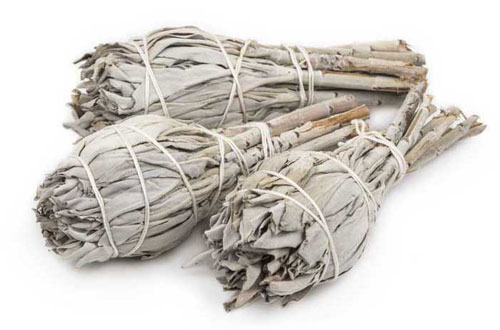
Uses of White Sage Around the World
White sage has been used for centuries in various cultures around the world for different purposes. Smudging with white sage is believed to cleanse negative energies from a space and raise vibrations. In addition, white sage incense is often used before ceremonies, meditation, during preparations for important events, or to boost energy. Through the ritual of burning white sage and other incense, the mind, body, and spirit are symbolically cleansed.
Traditional Use of White Sage Among Native North American Peoples
Due to its wide range of beneficial effects, white sage has long been considered sacred among Native Americans. White sage has a rich tradition of use among Indigenous peoples of North America, especially among tribes such as the Navajo, Apache, and others. It is used for various purposes, including space cleansing, removing negative energies, preparation for important ceremonies, healing, and connecting with the spiritual world. Rituals involving white sage were and still are an important part of their culture and spiritual practices.
White sage requires sufficient airflow when burned. Native American tribes traditionally use bird feathers for this purpose. The smoke represents prayers rising into the cosmos, which is why prayers are spoken during the burning ritual. In Native American ceremonies, attention is given to the energies of the four cardinal directions (north, south, east, west), represented by four powerful animal spirit guides: the white buffalo, coyote, eagle, and grizzly bear. These are also connected to the four elements: earth, water, fire, and air.
North – Spirit of the White Buffalo: grounds, protects, and provides knowledge of life and death. Governs the element of earth.
South – Spirit of the Coyote: represents a sharp and quick mind, governs emotions, and is connected to the element of water.
East – Spirit of the Eagle: symbolizes inspiration, vision, protection, and purification, and governs the element of air.
West – Spirit of the Grizzly Bear: represents strength, determination, vitality, and cleansing, and governs the element of fire.
Effects of White Sage Smoke
The most important effect of white sage is energetic cleansing. It is also believed to bring protection, mental clarity, a sense of peace, and harmony.
White Sage Incense in Modern Life
There is a growing interest in natural incense and the use of white sage, especially among spiritually aware individuals seeking natural ways to cleanse the aura, spaces, and objects.
When Is the Use of White Sage Incense Recommended?
Incense is used to cleanse energy. Regular use of white sage incense may contribute to a greater sense of clarity and support personal growth. It is important to take care of cleansing both ourselves and our surroundings. Ancient cultures believed that negative forces cannot enter a space filled with sage smoke.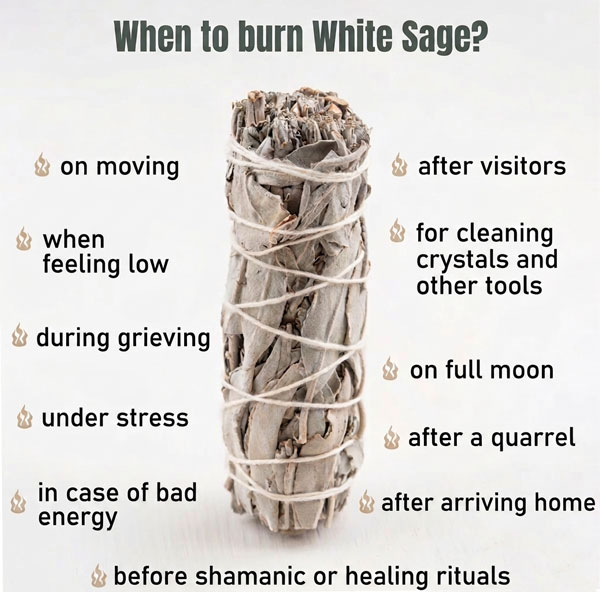
So, when should white sage incense be used?
Whenever we feel the need to cleanse energy—our own or that of our environment—especially on the following occasions:
- cleansing the energy of a space (home, workplace, car...)
- before meditation or as part of a spiritual practice
- before moving to a new place
- after an argument
- during times of grief
- after attending large gatherings or crowds
- during periods of low energy or discomfort
- during the full moon
- during stress
- cleansing the aura
- cleansing crystals, jewelry, and other objects
- after energetically demanding situations
- before energy healing sessions and shamanic rituals, etc.
Precautions When Using White Sage Incense
When using white sage incense, it is important to follow certain safety precautions. Always handle fire carefully and respectfully, and never leave burning incense unattended or near children. Place the burning sage in a fireproof bowl or shell on a stable surface, away from flammable materials. Ventilate the space well after use; some people prefer to keep windows open during smudging.
How to Use White Sage Incense
Preparation: Light the tip of the white sage using a match or candle and allow it to catch fire.
Extinguish the flame: Once it burns well, gently blow out the flame or wave the bundle through the air so it begins to smolder. The smoke should be steady but not too thick.
Smudge the space: Walk through the area you wish to cleanse or bless with the smoking sage bundle or loose leaves in a fireproof container. Use your hand or a feather to spread the smoke in all directions, paying special attention to corners, windows, doors, and other areas you wish to cleanse.
Set your intention: During the ritual, visualize or state your intention, such as clearing negativity, attracting positive energy, or blessing the space.
When finished, place the sage in a fireproof bowl or shell and allow it to extinguish completely. You may also extinguish it in water or sand (then dry and store the remaining sage for later use). Be cautious, as the container may remain hot.
Explore our selection of white sage, available in various bundle sizes or combined with other herbs. White sage is also available as loose leaves or small branches.
Frequently Asked Questions About White Sage
Is white sage suitable for everyone?
White sage is a natural incense; however, it is recommended to use it in moderation and to ensure proper ventilation of the space after use.
This article is for informational purposes only and is based on personal experience and the experiences of users.
 Stay Connected